What Suspension and Steering Systems 2026 Lincoln Aviator?
The Lincoln Aviator uses an independent suspension layout combined with electric power-assisted steering. Depending on the configuration, it may include adaptive suspension components designed to adjust damping characteristics in real time. Lincoln Aviator Suspension Architecture Overview The Aviator uses a fully independent suspension system at both the front and rear. Main elements include: Independent suspension […]
The Lincoln Aviator uses an independent suspension layout combined with electric power-assisted steering. Depending on the configuration, it may include adaptive suspension components designed to adjust damping characteristics in real time.
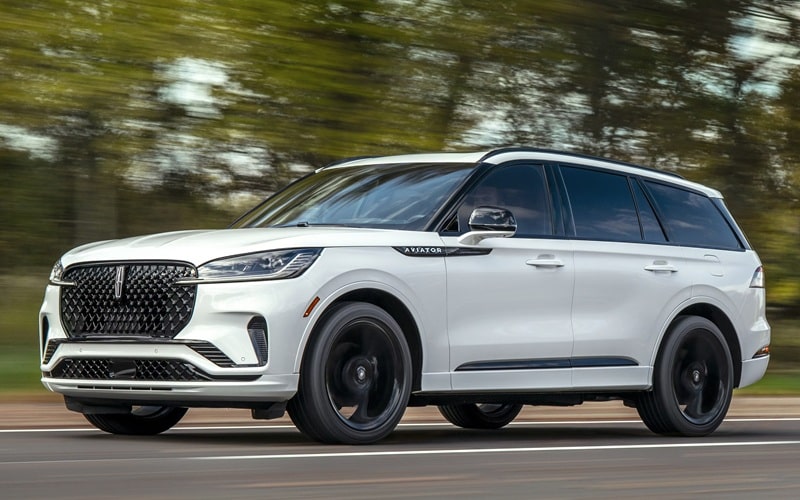
Lincoln Aviator Suspension Architecture Overview
The Aviator uses a fully independent suspension system at both the front and rear.
Main elements include:
- Independent front suspension
- Independent rear suspension
- Coil springs or air springs depending on configuration
- Stabilizer bars
- Adaptive damping system on equipped models
Independent suspension allows each wheel to move vertically without directly affecting the opposite side.
This layout supports ride stability and steering precision.
Front Suspension Design
The front suspension uses a short-long arm (SLA) configuration.
Key components include:
- Upper control arm
- Lower control arm
- Coil spring or air spring
- Shock absorber
- Stabilizer bar
The SLA design controls wheel camber during suspension travel. This helps maintain tire contact with the road surface.
Mounting points attach directly to the vehicle’s structural subframe.
Rear Suspension Design
The rear suspension uses a multi-link configuration.
Primary elements include:
- Multiple control arms
- Coil springs or air springs
- Rear shock absorbers
- Rear stabilizer bar
Multi-link geometry allows:
- Independent vertical wheel movement
- Controlled toe and camber angles
- Reduced road vibration transfer
This configuration supports stable cornering and consistent tire contact.
Coil Spring Configuration
Standard configurations use steel coil springs.
Coil springs:
- Support vehicle weight
- Maintain ride height
- Work with shock absorbers to manage vertical motion
Spring rate calibration balances comfort and load support.
Air Suspension System
Certain trims include an adaptive air suspension system.
Air suspension components include:
- Air springs at each wheel
- Air compressor
- Height sensors
- Electronic control module
The system adjusts ride height based on driving conditions and vehicle load.
Ride height may change to:
- Improve aerodynamics at highway speeds
- Increase ground clearance at lower speeds
- Maintain level stance when carrying passengers or cargo
Toronto Lincoln Dealers may offer Aviator configurations equipped with adaptive air suspension.
Adaptive Damping System
Equipped models include an adaptive damping system.
This system uses:
- Electronically controlled shock absorbers
- Body motion sensors
- Suspension travel sensors
The system adjusts the damping force based on:
- Road surface conditions
- Steering input
- Vehicle speed
Damping calibration changes in milliseconds to maintain ride stability.
Stabilizer Bars
The Aviator uses front and rear stabilizer bars.
These bars:
- Connect the left and right suspension components
- Reduce body roll during cornering
- Improve handling response
Stabilizer bars resist excessive lateral movement.
Steering System Overview
The Aviator uses an electric power-assisted steering (EPAS) system.
Key components include:
- Steering rack
- Electric assist motor
- Steering angle sensor
- Control module
Electric assist replaces traditional hydraulic steering pumps.
Electric Power Steering Operation
Electric power steering provides assistance based on:
- Vehicle speed
- Steering input
- Driving mode selection
At low speeds:
- Steering assist increases
- Steering effort decreases
At higher speeds:
- Steering assist reduces
- Steering feel becomes firmer
The system operates electronically and does not require hydraulic fluid.
Steering Rack and Mounting
The steering rack mounts to the front subframe.
This mounting structure provides:
- Stable alignment
- Reduced vibration transfer
- Accurate steering response
Rigid attachment supports consistent steering geometry.
Drive Mode Integration
The Aviator includes selectable drive modes.
Drive modes may adjust:
- Steering effort
- Suspension damping
- Ride height on air suspension models
Electronic control modules coordinate steering and suspension calibration changes.
Toronto Lincoln Dealers may provide details about drive mode configurations available on specific trims.
All-Wheel Drive Integration
The Aviator is available with rear-wheel drive or all-wheel drive.
All-wheel drive integration does not alter suspension architecture but may affect:
- Weight distribution
- Driveline mounting points
Suspension calibration accounts for drivetrain configuration.
Body and Suspension Interaction
The Aviator uses a unibody structure.
Suspension components attach to:
- Front subframe
- Rear subframe
Subframes isolate road vibration from the cabin.
This mounting design improves ride refinement.
Wheel Alignment Specifications
Proper suspension operation depends on wheel alignment.
Alignment includes:
- Camber
- Caster
- Toe
Independent front and rear suspension allows precise adjustment.
Misalignment can affect steering response and tire wear.
Suspension Travel and Load Support
Suspension travel refers to the vertical range of wheel movement.
The Aviator suspension supports:
- Passenger load
- Cargo weight
- Road surface variation
Air suspension systems automatically compensate for added weight to maintain the level ride height.
Steering Safety and Assistance Integration
The electric steering system integrates with driver assistance systems.
Integration may include:
- Lane keeping support
- Stability control coordination
- Steering torque adjustment
Electronic steering input works with safety systems to support vehicle control.
Maintenance Considerations
Suspension and steering components require periodic inspection.
Service items include:
- Control arm bushings
- Ball joints
- Shock absorbers
- Air suspension components
- Steering rack operation
Electric steering systems do not require hydraulic fluid service.
Suspension and Steering Summary
The Lincoln Aviator uses:
- Independent front short-long arm suspension
- Independent rear multi-link suspension
- Coil springs or adaptive air suspension
- Electronically controlled adaptive dampers on equipped models
- Front and rear stabilizer bars
- Electric power-assisted steering
- Subframe-mounted suspension components
These systems work together to support ride stability, steering precision, and controlled body motion.
Questions and Answers: Lincoln Aviator
What type of front suspension does the 2026 Aviator use?
- It uses an independent short-long arm front suspension.
Does the Aviator include rear independent suspension?
- Yes. It uses a multi-link independent rear suspension.
What type of steering system does it use?
- It uses an electric power-assisted steering system.
Is adaptive air suspension available?
- Yes. Certain configurations include an adaptive air suspension system with adjustable ride height.
How does drive mode affect steering and suspension?
- Drive mode selection can adjust steering effort and suspension damping calibration on equipped models.
Disclaimer: Content contained in this post is for informational purposes only and may include features and options from US or international models. Please contact the dealership for more information or to confirm vehicle, feature availability.