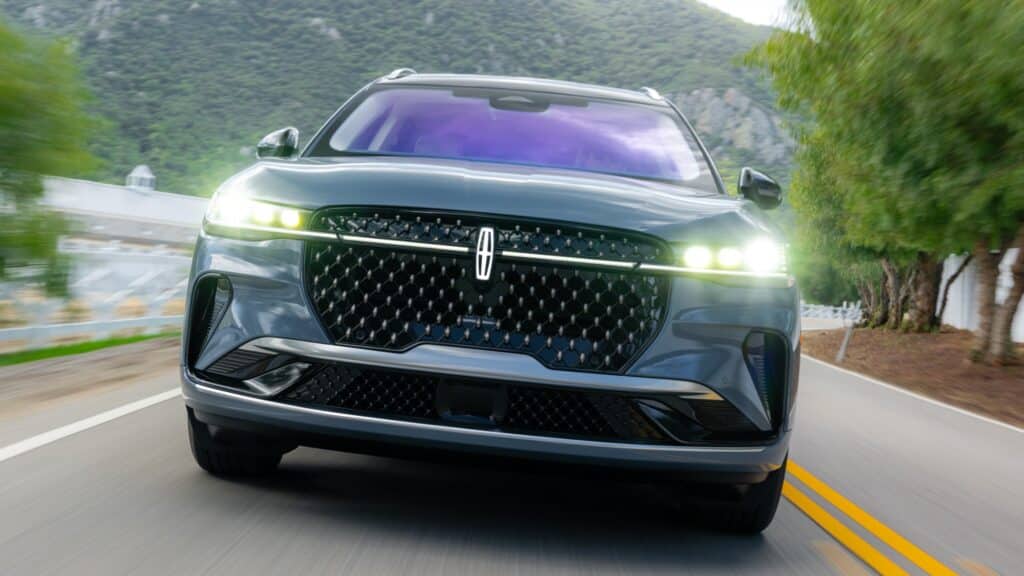
2026 Lincoln Aviator: All About The Suspension and Steering
The Lincoln Aviator is a mid-size luxury SUV engineered with advanced chassis technologies to enhance ride comfort, handling stability, and driver control. Suspension and steering systems play a central role in achieving these objectives by managing vehicle dynamics, absorbing road irregularities, and translating driver input into directional movement. Suspension System Architecture The suspension system in […]
The Lincoln Aviator is a mid-size luxury SUV engineered with advanced chassis technologies to enhance ride comfort, handling stability, and driver control. Suspension and steering systems play a central role in achieving these objectives by managing vehicle dynamics, absorbing road irregularities, and translating driver input into directional movement.
Suspension System Architecture
The suspension system in the Lincoln Aviator is a fully independent setup on both the front and rear axles. This configuration allows each wheel to move independently, improving ride comfort and handling precision.
Front Suspension: Double Wishbone Design
The front suspension typically uses a double-wishbone (short-long-arm) configuration.
Key components:
- Upper and lower control arms
- Coil spring or air spring
- Adaptive shock absorber
- Stabilizer bar
Functionality:
- Maintains optimal tire contact with the road
- Controls camber changes during suspension travel
- Enhances steering precision
Rear Suspension: Multi-Link System
The rear suspension uses a multi-link independent design.
Key components:
- Multiple lateral and longitudinal control arms
- Subframe assembly
- Springs (coil or air)
- Adaptive dampers
Functionality:
- Separates longitudinal and lateral forces
- Improves ride isolation
- Provides better handling stability
Adaptive Suspension System
Electronically Controlled Dampers
The Aviator have adaptive dampers that adjust damping force in real time.
Operation:
- Sensors monitor road conditions, vehicle speed, and body motion
- Control module adjusts damper stiffness accordingly
Benefits:
- Softer damping for comfort on uneven surfaces
- Firmer damping for stability during cornering
Air Suspension (Available Configuration)
An available air suspension system replaces conventional coil springs with air springs.
Components:
- Air springs (rubber bellows)
- Air compressor
- Air reservoir
- Height sensors
- Control module
Functionality:
- Adjusts ride height automatically
- Maintains level ride regardless of load
- Improves aerodynamic efficiency at higher speeds
Ride Height Control
The system can modify ride height depending on driving conditions.
Examples:
- Lower ride height at higher speeds to reduce drag
- Raise vehicle for rough terrain or obstacle clearance
Height adjustments are typically measured in millimetres and controlled electronically.
Suspension Control Systems
Drive Mode Integration
The suspension system is linked to selectable drive modes.
Adjustments include:
- Damping stiffness
- Ride height (if equipped with air suspension)
- Body control parameters
Road Preview Technology (If Equipped)
Some configurations may include forward-facing sensors or cameras.
Function:
- Detect upcoming road irregularities
- Pre-adjust suspension settings
This enhances comfort by preparing the system before encountering bumps.
Stabilizer Bars (Anti-Roll Bars)
Both front and rear axles include stabilizer bars.
Function:
- Reduce body roll during cornering
- Improve lateral stability
Some systems may include active or semi-active control.
Steering System Architecture
Electric Power-Assisted Steering (EPAS)
The Lincoln Aviator uses an electric power-assisted steering system.
Key characteristics:
- No hydraulic pump
- Electrically driven assist motor
- Variable steering assistance
Core Components
Steering Rack and Pinion
The system uses a rack-and-pinion mechanism.
Function:
- Converts rotational motion of the steering wheel into linear motion
- Directly controls wheel angle
Electric Assist Motor
An electric motor provides steering assistance.
Operation:
- Reduces steering effort
- Adjusts assistance based on vehicle speed
Steering Control Module
The control module processes input from various sensors.
Inputs:
- Steering angle
- Vehicle speed
- Yaw rate
- Lateral acceleration
Outputs:
- Adjusted steering assistance
- Feedback characteristics
Variable Steering Assistance
Speed-Sensitive Steering
The level of assistance varies with speed.
- Low speed → higher assistance for easier maneuvering
- High speed → reduced assistance for better stability
Steering Ratio and Response
The system may incorporate variable steering response.
Function:
- Adjusts steering sensitivity
- Improves control during different driving conditions
Integration with Driver Assistance Systems
The steering system is integrated with advanced driver assistance systems (ADAS).
Lane Keeping Assistance
- Applies small steering corrections
- Helps maintain lane position
Stability Control Integration
- Works with electronic stability control (ESC)
- Adjusts steering input during loss of traction
Automated Steering Support
In certain conditions, the system may assist with:
- Parking maneuvers
- Low-speed directional control
Engineering Considerations
Precision and Feedback
The steering system is calibrated to provide:
- Accurate response to driver input
- Controlled feedback through the steering wheel
Energy Efficiency
Electric steering systems reduce energy consumption compared to hydraulic systems.
- No continuous engine-driven pump
- Assistance only when needed
Redundancy and Safety
The system includes safeguards such as:
- Backup power strategies
- Fault detection algorithms
Interaction Between Suspension and Steering
The suspension and steering systems operate as an integrated chassis system.
Coordinated Control
- Suspension stabilizes vehicle body
- Steering directs vehicle path
Both systems share data through vehicle networks.
Dynamic Stability
During cornering:
- Suspension controls body roll
- Steering adjusts direction
This coordination improves handling precision.
Maintenance and Durability
Suspension Components
Key maintenance areas include:
- Control arm bushings
- Ball joints
- Dampers
Air Suspension Maintenance
If equipped:
- Air lines and seals must remain leak-free
- Compressor operation must be monitored
Steering System Maintenance
Electric steering systems require minimal maintenance but depend on:
- Sensor accuracy
- Electrical system integrity
The suspension and steering configurations described above are consistent with technical system explanations typically discussed in service environments such as Toronto Lincoln Dealers, where accurate diagnosis depends on understanding electronically controlled chassis systems.
System Performance Characteristics
Ride Comfort
- Isolation from road irregularities
- Controlled vertical motion
Handling Stability
- Reduced body roll
- Improved traction during cornering
Steering Precision
- Direct response to driver input
- Consistent feedback across conditions
2026 Lincoln Aviator FAQ
What type of suspension does the 2026 Lincoln Aviator use?
- It uses a fully independent suspension system with a double-wishbone front setup and a multi-link rear configuration, with available adaptive and air suspension options.
Does the Aviator have air suspension?
- Yes, an air suspension system is available, allowing adjustable ride height and improved load levelling.
What type of steering system is used?
- The vehicle uses an electric power-assisted steering (EPAS) system with a rack-and-pinion design.
How does adaptive suspension work?
- Adaptive dampers adjust stiffness in real time based on sensor data, improving both comfort and handling.
Is the steering system integrated with driver assistance features?
- Yes, the steering system works with systems such as lane keeping assistance and stability control to enhance vehicle safety and control.
Disclaimer: Content contained in this post is for informational purposes only and may include features and options from US or internacional models. Please contact the dealership for more information or to confirm vehicle, feature availability.