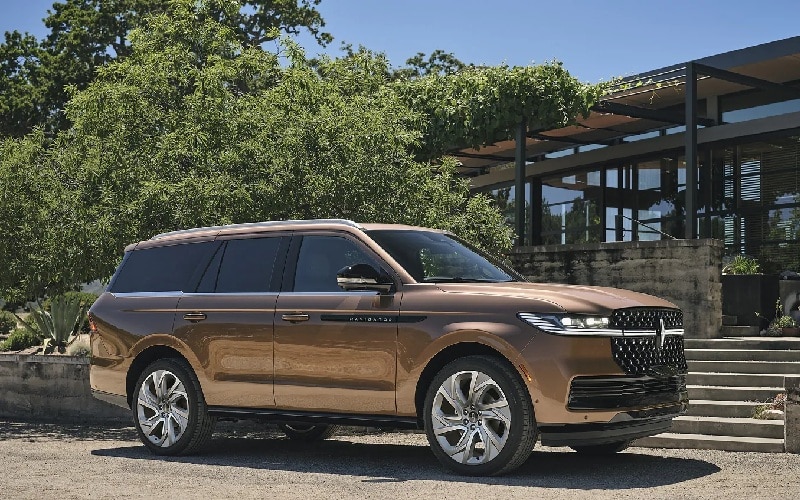
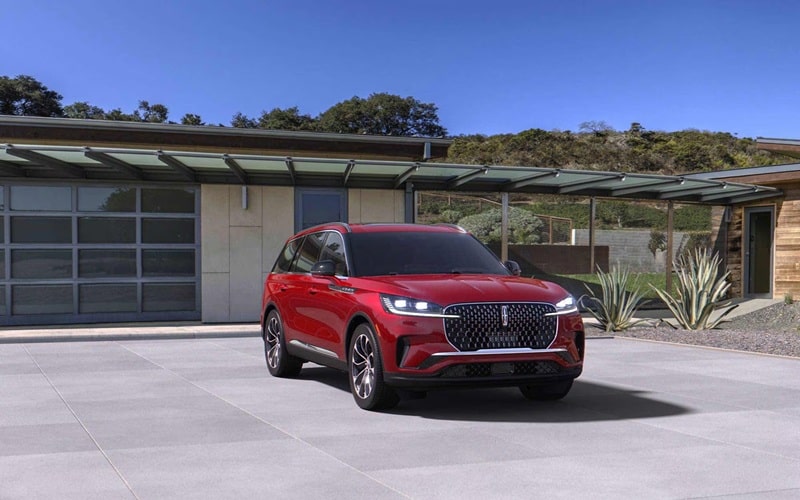
What Drive Train Does The 2026 Lincoln Navigator Offer?
The Lincoln Navigator offers a twin-turbocharged gasoline engine paired with a 10-speed automatic transmission. Buyers can choose between rear-wheel drive and four-wheel drive configurations. The drivetrain supports passenger capacity, towing capability, and full-size SUV performance requirements. Lincoln Navigator Drivetrain Overview The drivetrain includes: These components transfer power from the engine to the wheels. 3.5-Litre Twin-Turbocharged […]
The Lincoln Navigator offers a twin-turbocharged gasoline engine paired with a 10-speed automatic transmission. Buyers can choose between rear-wheel drive and four-wheel drive configurations. The drivetrain supports passenger capacity, towing capability, and full-size SUV performance requirements.
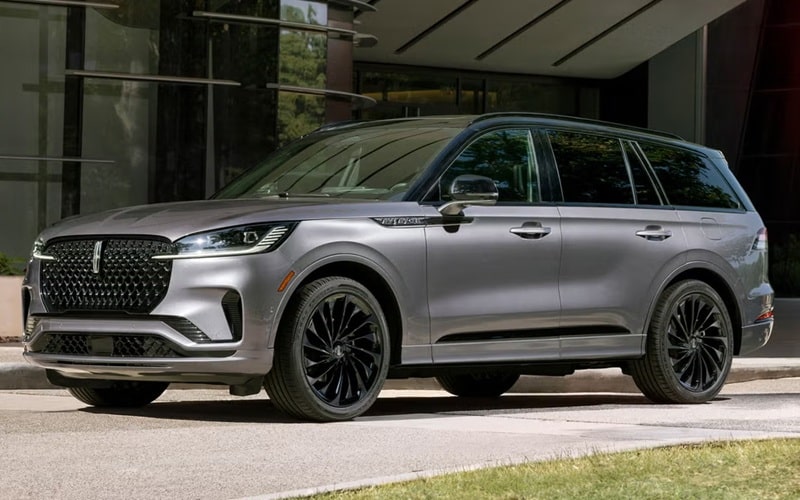
Lincoln Navigator Drivetrain Overview
The drivetrain includes:
- Twin-turbocharged V6 engine
- 10-speed automatic transmission
- Rear-wheel drive (RWD) configuration
- Available four-wheel drive (4WD) system
- Rear differential
- Transfer case on 4WD models
- Driveshaft assemblies
These components transfer power from the engine to the wheels.
3.5-Litre Twin-Turbocharged V6 Engine
The Navigator uses a 3.5-litre twin-turbocharged V6 engine.
Key characteristics include:
- Direct fuel injection
- Dual turbochargers
- Electronic throttle control
- Variable cam timing
The twin turbochargers compress intake air, which increases torque output across a broad engine speed range.
Engine torque transfers through the transmission to the selected drivetrain layout.
10-Speed Automatic Transmission
All configurations use a 10-speed automatic transmission.
Features include:
- Electronically controlled shifting
- Wide gear ratio spread
- Adaptive shift logic
- Tow/Haul mode calibration
The wide gear ratio range supports:
- Low-speed torque multiplication
- Efficient highway cruising
- Smooth acceleration
The transmission connects directly to the rear driveshaft in RWD models or to a transfer case in 4WD models.
Rear-Wheel Drive Configuration
Rear-wheel drive is standard on the Navigator.
In this layout:
- Power transfers to the rear axle only
- A single rear driveshaft connects the transmission to the rear differential
- Front wheels remain free from engine torque
Rear-wheel drive supports:
- Balanced weight distribution
- Traditional full-size SUV drivetrain layout
Four-Wheel Drive System
Four-wheel drive is available.
The 4WD system includes:
- Two-speed transfer case
- Front driveshaft
- Front differential
- Rear differential
The system distributes torque to both front and rear axles.
Driver-selectable modes typically include:
- 2H (rear-wheel drive high range)
- 4H (four-wheel drive high range)
- 4L (four-wheel drive low range)
Low range increases torque output for low-speed situations such as steep inclines or uneven terrain.
Transfer Case Operation
The transfer case manages torque distribution between axles.
Functions include:
- Engaging four-wheel drive
- Selecting high or low range
- Distributing torque evenly or automatically
Electronic controls monitor wheel slip and adjust torque delivery when required.
Differential Systems
The rear differential distributes torque between left and right rear wheels.
Certain configurations may include:
- Electronic limited-slip rear differential
An electronic limited-slip differential improves traction by adjusting torque distribution between rear wheels when slip occurs.
On 4WD models, the front differential distributes torque between the front wheels.
Driveshaft and Axle Construction
The drivetrain includes:
- Rear driveshaft
- Front driveshaft on 4WD models
- Solid rear axle housing
- Independent front suspension differential housing
Materials may include steel or aluminum alloy, depending on configuration.
Axle components are engineered to handle high torque output from the twin-turbocharged engine.
All-Wheel Drive vs Four-Wheel Drive
The Navigator uses a selectable four-wheel-drive system rather than a continuously variable all-wheel-drive layout.
Selectable 4WD allows the driver to control:
- When four-wheel drive engages
- Whether low-range gearing is active
This system provides flexibility for varying road conditions.
Drive Mode Integration
The Navigator includes selectable drive modes.
Drive modes may adjust:
- Throttle response
- Transmission shift calibration
- Steering effort
- Four-wheel drive engagement
Typical modes may include:
- Normal
- Excite
- Conserve
- Slippery
- Deep Conditions
- Tow/Haul
Electronic control modules coordinate drivetrain behaviour based on selected mode.
Towing Capability and Drivetrain Support
The drivetrain supports towing through:
- Reinforced transmission cooling
- Tow/Haul mode calibration
- High-strength rear axle components
- Integrated trailer sway control
Tow/Haul mode adjusts shift timing to:
- Reduce gear hunting
- Improve engine braking
- Maintain stable towing performance
Four-wheel drive may assist with traction when launching a trailer.
Cooling and Thermal Management
Drivetrain components include thermal management systems such as:
- Transmission fluid cooler
- Engine oil cooling integration
- Differential lubrication system
Cooling systems maintain proper operating temperatures under load.
The 10-speed automatic transmission includes fluid cooling to protect internal components.
Electronic Control Modules
Drivetrain operation depends on electronic control modules.
These modules manage:
- Gear selection
- Torque distribution
- Turbocharger boost control
- Traction control interaction
Sensors monitor wheel speed, throttle position, and load conditions.
Electronic systems coordinate with stability control and braking systems.
Traction and Stability Integration
The drivetrain integrates with:
- Traction control system
- Electronic stability control
- Hill descent control
These systems may apply selective braking or adjust engine torque to maintain vehicle stability.
In low-traction situations, four-wheel drive and electronic differential control work together.
Drivetrain Summary
The Lincoln Navigator drivetrain includes:
- 3.5-litre twin-turbocharged V6 engine
- 10-speed automatic transmission
- Standard rear-wheel drive
- Available two-speed four-wheel drive system
- Rear differential and front differential on 4WD models
- Electronic limited-slip rear differential on certain trims
- Drive mode calibration integration
These components deliver power to the wheels while supporting towing, passenger load, and full-size SUV performance.
Questions and Answers
What engine does the 2026 Navigator use?
It uses a 3.5-litre twin-turbocharged V6 engine.
What transmission is paired with the engine?
The engine pairs with a 10-speed automatic transmission.
Is four-wheel drive available?
Yes. The Navigator offers an available two-speed four-wheel drive system.
What does the transfer case do?
The transfer case distributes torque between the front and rear axles and allows selection of high or low range.
Does the Navigator include an electronic limited-slip differential?
Certain configurations include an electronic limited-slip rear differential to improve traction.
Disclaimer: Content contained in this post is for informational purposes only and may include features and options from US or internacional models. Please contact the dealership for more information or to confirm vehicle, feature availability.